Microvascular Decompression
Make an Appointment
Our team of dedicated access representatives is here to help you make an appointment with the specialists that you need.
Microvascular decompression (MVD) is a surgical treatment designed to treat facial pain or facial spasm that is not helped by other medical therapies. MVD is a microsurgical procedure, meaning the neurosurgeon uses an operating microscope and fine instruments to operate on the delicate blood vessels and nerves. At Columbia, microvascular decompression is performed by highly experienced cranial nerve surgeons, including Raymond F. Sekula Jr., MD, who has performed more than 3,000 MVDs for trigeminal neuralgia, hemifacial spasm, and glossopharyngeal neuralgia.
Dr. Sekula performed a microvascular decompression, and I woke up postoperatively pain free. One year later, I continue to be pain-free and have tapered off the three medications I had been on to manage the pain. I don't think I can ever thank Dr. Sekula enough. He has given me a new lease on life!
Cranial nerves are 12 pairs of nerves that provide communication between the brain and the face, head and neck. Sometimes small arteries and/or veins irritate these critical nerves by pushing on them. (This anatomical relationship is often referred to as a "neurovascular conflict.") Such pressure can cause severe pain as well as painful muscle spasms.
During MVD, surgeons separate the painful nerve from the impinging vessel using a tiny Teflon "sponge" or pad. This cushioning relieves the pressure on the nerve and allows it to heal. For many patients, this offers the most durable long-term relief while preserving normal nerve function.
I had microvascular decompression surgery in 2023. I was first diagnosed with trigeminal neuralgia about a year before I met with Dr. Sekula. The day I spoke with Dr. Sekula, he immediately arranged all the necessary scans and took my concerns seriously. He is an amazing surgeon and gave me a new lease on life. I have no facial pain, and I was able to go on vacation and enjoy my life without fear of a flare-up.
When is Microvascular Decompression performed?
MVD is most often used in the treatment of trigeminal neuralgia, hemifacial spasm and glossopharyngeal neuralgia. It is often recommended when medications no longer control symptoms, side effects become intolerable, or patients are seeking a more durable long-term solution.
MVD requires general anesthesia and brain surgery; therefore it is not typically the first line of treatment for these conditions. However, when the condition is extreme, when more conservative care has been exhausted and/or when medication side effects are intolerable, this procedure can be extremely effective.
How should I prepare for Microvascular Decompression?
Before the day of the procedure, the patient will receive imaging tests like MRI (magnetic resonance imaging) and/or MRA (magnetic resonance angiography). These will help the surgeon check the nerves and blood vessels and plan the surgery.
Microvascular decompression is performed under general anesthesia.
First, the surgeon makes an incision behind the ear and removes a small piece of bone. Through this "window" of bone, the surgeon will access the brain. Then the surgeon opens the dura. To expose the cranial nerve, the surgeon retracts the cerebellum away from the base of the skull.
Using an operating microscope, the surgeon isolates the nerve causing pain, most often the trigeminal nerve, separating it from connective tissues and nearby structures. Then the surgeon inserts a small Teflon sponge between the nerve and the blood vessel believed to be causing the compression and nerve pain.
After the Teflon sponge is inserted, the surgeon closes the dura. Finally, the surgeon replaces the "window" of bone or covers the bony opening with bone cement or titanium mesh. Then the surgeon closes the incision, and the procedure is over. After surgery, patients are closely monitored in a specialized neurosurgical recovery setting, and many may not require an intensive care unit stay depending on their individual care plan.
How is Microvascular Decompression performed?
Make sure you understand the goals and potential risks of this procedure. It may help to write down your questions as you think of them and bring the list to discuss with your doctor.
Microvascular decompression tends to provide fairly long-lasting, but not permanent, pain relief. In trigeminal neuralgia and glossopharyngeal neuralgia, the best evidence shows that between 77 and 95 percent of patients experience pain relief after MVD. The pain relief lasts an average of 10 to 15 years.
Research has shown that experience matters in microvascular decompression surgery. Surgeons who are more experienced performing microvascular decompressions tend to have better outcomes with fewer complications. This is especially important for complex anatomy, recurrent symptoms, and patients who have had prior procedures. Patients who are considering microvascular decompression may wish to look for a center, like Columbia's, where the surgeons have extensive experience with the procedure.
What can I expect after Microvascular Decompression?
How long will I stay in the hospital?
Many patients are able to return home within one to four nights, depending on the complexity of the procedure and their recovery.
Will I need to take any special medications?
After surgery, you may be prescribed a brief course of narcotic medication for pain control. Narcotic medications can be habit-forming and can have unpleasant side effects, so these are not used indefinitely. Tylenol is usually adequate for pain control after the first postoperative week or two.
At first, you will continue your normal presurgical medication schedule of pain relievers or anticonvulsants. You will gradually wean off these medications.
Will I need rehabilitation or physical therapy?
Physical therapy is not always necessary. However, your body will need time to recuperate from surgery. Talk with your doctor about how much time to expect for your recovery and at what point you will be able to return to normal activities.
Will I have any long-term limitations due to microvascular decompression?
Major complications are fairly rare, but they can occur. Discuss these with your neurosurgeon. Otherwise, no long-term limitations are anticipated.
While many patients experience relief for 10 to 15 years or longer, a recurrence of symptoms may occasionally require additional treatment or revision surgery. A return of the pain may necessitate further surgery.
Patient Stories
-
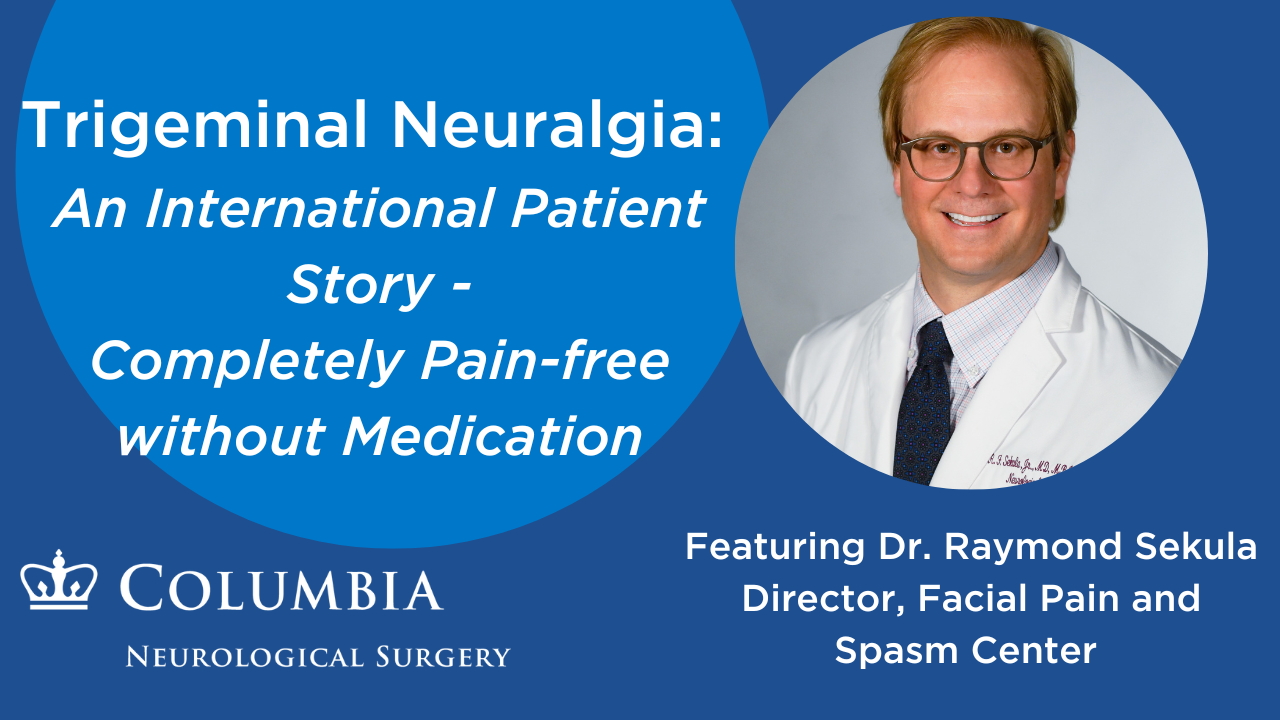
In a 6-week post-surgery interview, Dr. Raymond Sekula speaks with Tulsie Singh who had been suffering from trigeminal neuralgia since 2020. Mr. Singh traveled from Trinidad to Columbia Neurosurgery. Before working with Dr. Sekula, this patient's facial pain was so severe that he could not put a toothbrush in his mouth and medication did not provide relief. Dr. Sekula discusses using microvascular decompression surgery with a hospital stay of mere hours for this man to be completely pain-free four days later and off all medications.